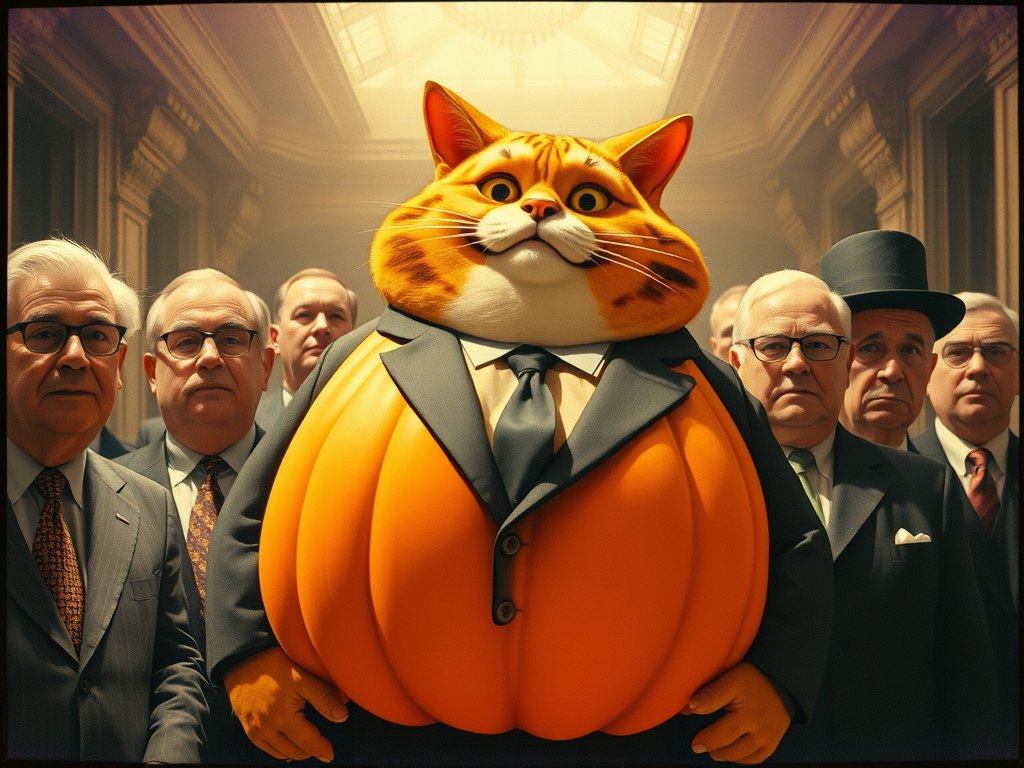
Not a Partisan Problem. An Institutional One.
The part I can’t make sense of isn’t partisan. It’s institutional.
The United States Senate should be boring. The loud, viral, reality-show version we see today isn’t typical. By design, it should be slow, rational, and intentional. Most importantly, it should guard its authority.
The Senate exists to restrain power, especially executive power. Treaties run through it. War powers are filtered by it, and tariffs are imposed by it. Oversight is its constitutional muscle. When it works, it is inconvenient by design.
A Theory of Human Behavior, Not an Accident
This design wasn’t an accident. It was a theory of human behavior.
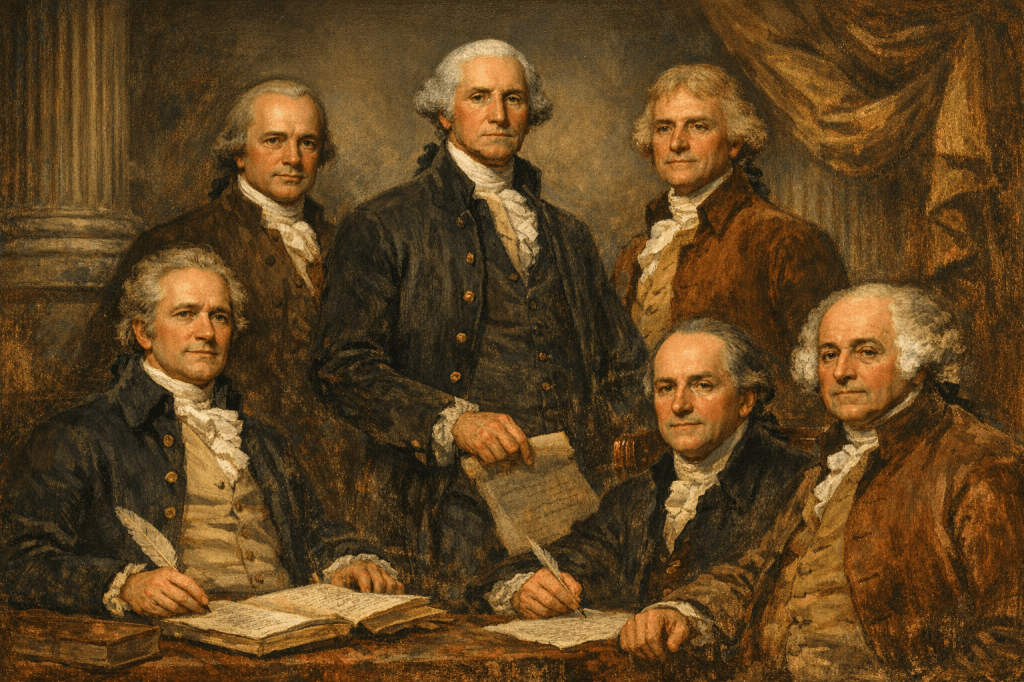
The Founding Fathers were Enlightenment thinkers. They studied Plato and the decay of Athenian democracy into mob rule and tyranny. They designed the Senate as a counterweight to passion, as a place for sober second thought, and as a guardrail against the rise of a demagogue who would concentrate absolute power.
The institutional spine of the Senate, its dignity, its deliberative pace, its fierce ownership of constitutional duties, was the physical embodiment of that safeguard. Its disappearance isn’t just a political shift. It’s the failure of a centuries-old intellectual bulwark.
Ambition Was Supposed to Fight Ambition
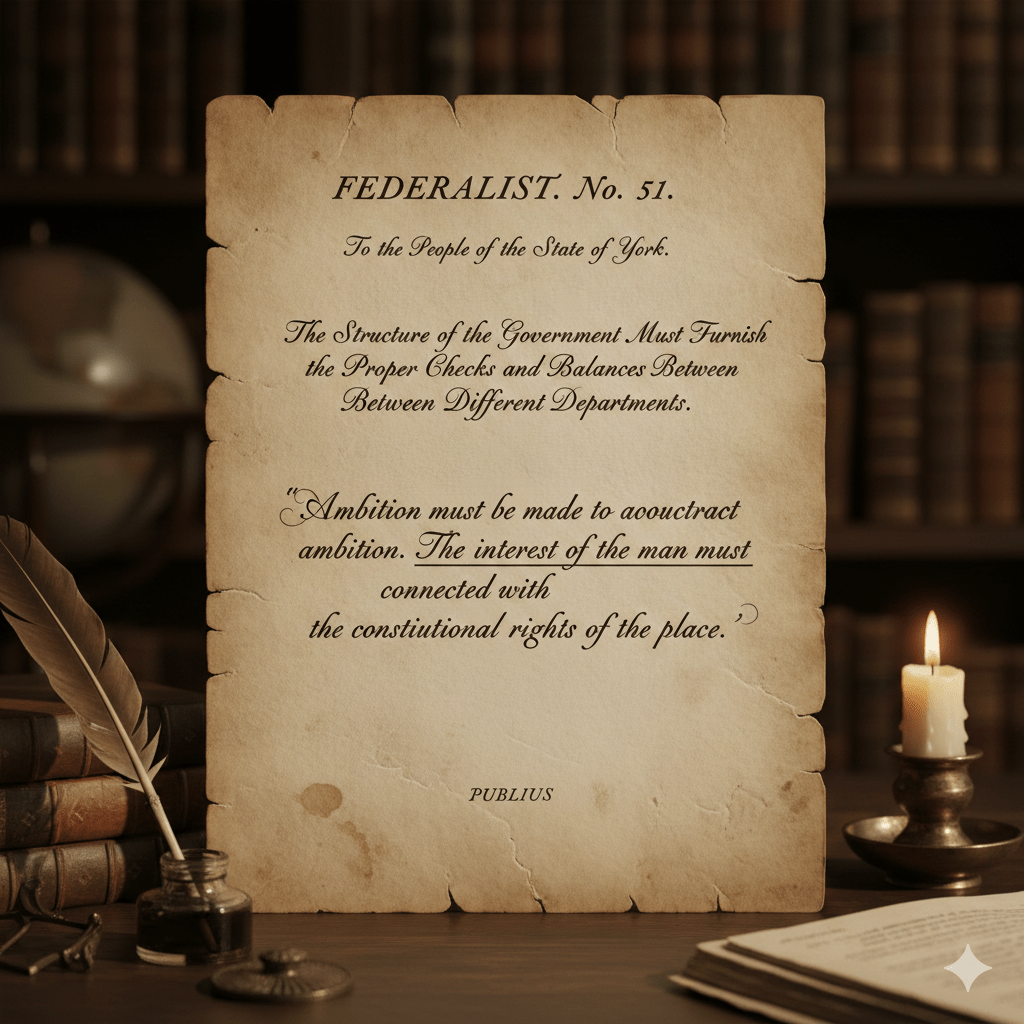
For anyone who wants to geek out on the Constitution for a minute, this part matters.
James Madison wrote in Federalist No. 51, “Ambition must be made to counteract ambition. The interest of the man must be connected with the constitutional rights of the place.”
Madison wasn’t describing an ideal Senate. He was describing a competitive one. A jealous one. A body that guards its power not out of moral purity, but because its own relevance depends on it.
In other words, the Senate was meant to be a rival, not a court.
From Rival to Servant
The Senate’s current failure begins with acquiescence. The more it rubber-stamps executive action, the more it ignores executive war cries, and the more it behaves like a servant, the less relevant it makes itself.
Chaos in the Saloon
Trump creates chaos the way a drunk gunslinger does. Not with strategy, but with unpredictability. Picture an Old West saloon full of unarmed people. A man waving a gun not because he has a plan, but because no one is stopping him. He’s not Wyatt Earp. He’s Ike from Tombstone. Loud, reckless, and dangerous precisely because there’s no sheriff in the room.
The Missing Sheriff
That’s where the Senate is supposed to come in. Its job isn’t to join the bar fight or cheer from the corner. It’s to restore law and order. Instead, through neglect and passivity, the Senate has chosen to sit on its hands, leaving us in an era defined by global instability, expanding executive overreach, and increasingly personalized power.
This isn’t restraint. It’s abdication.
When Silence Becomes Negligence
The Constitution assumes power will encroach. Madison warned that power is “of an encroaching nature” and must be actively restrained. What the Framers never imagined was a legislature that would voluntarily stop resisting. A Senate that would confuse silence with prudence, and loyalty to a criminal as virtue.
The Value of Slowness
The Senate was meant to slow things down. Not because slowness is noble, but because haste is dangerous. There’s a reason the chamber has longer terms, fewer members, and procedural friction. As the widely cited story attributed to George Washington goes, the House pours legislation into the Senate to cool it. The image matters less than the principle. The Senate was designed to absorb heat, not amplify it.
Alexander Hamilton made the point more bluntly. In Federalist No. 62, he warned of “the propensity of all single and numerous assemblies to yield to the impulse of sudden and violent passions.” The Senate was supposed to resist urgency, not chase it. Today, it often does the opposite.
Executive Momentum and the Role of Resistance
This returns us to the central flaw: a failure of institutional character. The Senate was designed to resist a constant force. Executive momentum. Power expands into vacuums. As James Wilson warned, “The executive power is better to be trusted when it has no shadow of a right to call for the support of the legislative.”
The Senate’s stubborn authority exists to create that vacuum. To withhold support. To ensure that executive action remains bounded, not enabled by passive permission. Legislative support was never meant to be automatic. Its purpose was to be conditional, skeptical, and occasionally withheld. When senators offer legitimacy without resistance, they aren’t being loyal. They are erasing a safeguard.
Trading Legacy for Proximity
This failure isn’t limited to one party or one state. It’s visible everywhere. Senators increasingly behave less like independent constitutional actors and more like middle managers hoping not to upset the CEO. They trade institutional authority for proximity. Long-term power for short-term alignment.
And in doing so, they misunderstand the office. The Founders spoke often about legacy. They called it honor, reputation, and what Hamilton described as “the desire of reward.” Not applause. Not clout. But lasting esteem.
The Senate was supposed to attract people who cared how history would read their names.
Instead, many appear content to be remembered as accessories. As background figures in someone else’s story. As senators who possessed immense constitutional power and chose not to exercise it.
That’s not humility. It’s a bad deal.
Abdication, Quietly Normalized
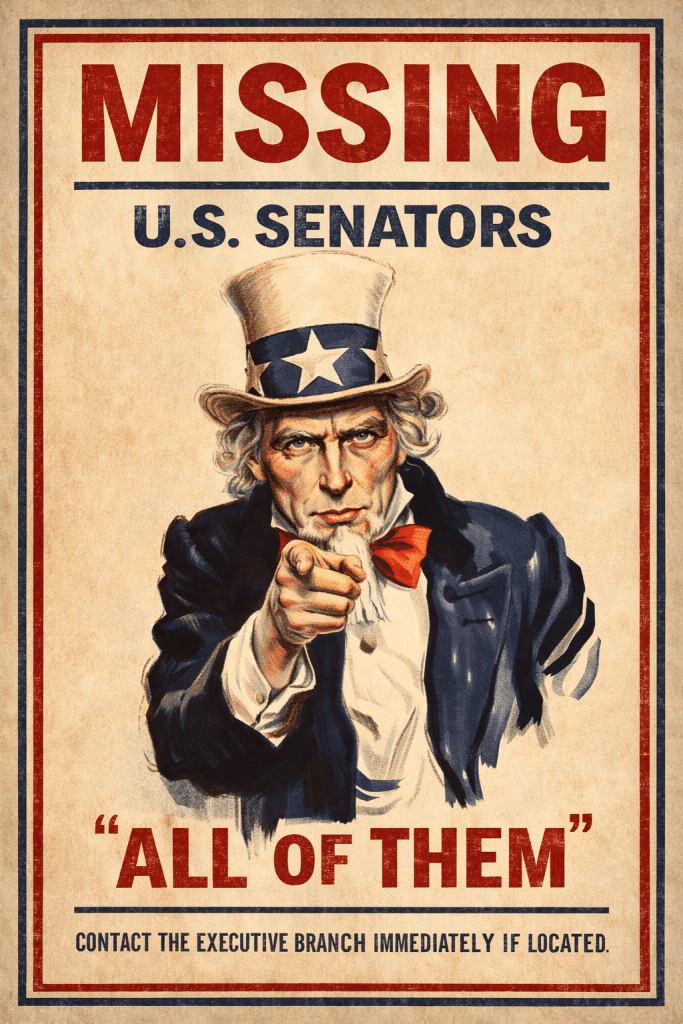
Political philosophers warned about this long before America existed. Montesquieu observed that every person invested with power is apt to abuse it, and that even virtue needs limits.
Limits aren’t insults. They’re necessities. Liberty depends on them.
When senators stop enforcing those limits, they don’t just weaken their branch. They weaken the entire system. Montesquieu warned that when legislative and executive powers collapse into alignment, liberty erodes quietly. No coup. No announcement. Just normalization. That’s the real tragedy.
Not that senators lost their power. That they handed it away. History won’t be confused about this moment. The Senate was there. It just didn’t stand up. And when future generations ask why executive authority ballooned unchecked and institutional balance collapsed, the answer won’t be mysterious.
- The safeguards existed.
- The warnings were written down.
- The Senate chose not to act.
- That isn’t politics.
- That’s abdication.
 McClure Magazine
Leave a comment