What if a billionaire’s wealth comes from joy instead of exploitation?
By Jason McClure
The Moment That Sparked The Question
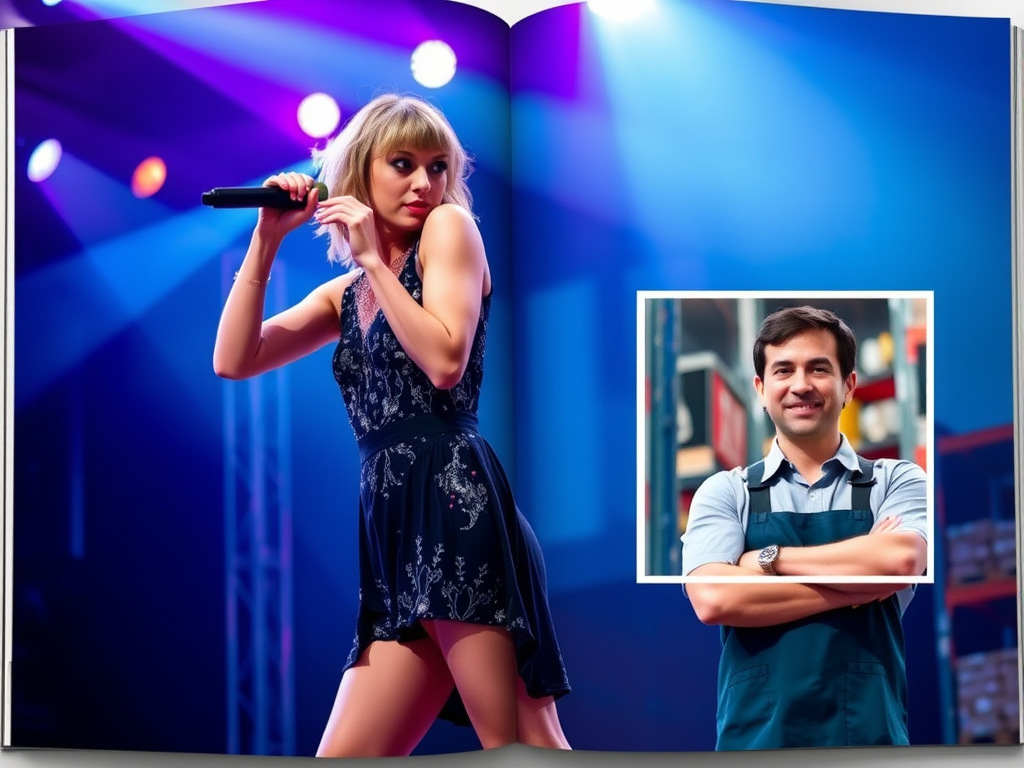
It was the middle of last summer’s Eras Tour, a cultural and economic phenomenon that had already rewritten the record books. In a quiet moment away from the roaring crowds, Taylor Swift gathered the backbone of her operation: the truck drivers. These were the men and women who had spent months on the road, hauling 50-plus trucks worth of stage equipment, intricate lighting rigs, and countless bespoke props from city to city.
She had an announcement. And then, she had a gift. Each driver was handed a check. The rumors swirled instantly—were they for a thousand dollars? Even ten thousand? The truth was more staggering. Each check was for one hundred thousand dollars. A life-altering sum, a reward for the grueling, invisible work that makes the magic possible.
The story, inevitably, leaked. It rippled through news outlets and social media, a feel-good story in a cynical time. Her loyal fans, the Swifties, who had long curated lists of her secret acts of generosity, nodded knowingly. Critics of extreme wealth, however, raised a skeptical eyebrow. And in that space between adulation and critique, a question began to circulate, a question that would have seemed absurd if applied to almost any other individual of her staggering net worth:
Could Taylor Swift actually be an ethical billionaire?
The Oxymoron
Let’s be clear: for most people, the term “ethical billionaire” feels like a contradiction in terms. The word “billionaire” has become synonymous with a specific kind of exploitation. It calls to mind low wages, broken unions, offshore accounts, and corporate structures meticulously designed to shift the responsibility of worker welfare onto the public. It represents a level of wealth so vast it is inherently anti-democratic, a monument to inequality.
But Taylor Swift’s fortune complicates that easy narrative. She is not a retail or logistics titan running warehouses where workers are timed on bathroom breaks. She is not paying employees so little that public assistance becomes a de facto subsidy for her payroll. She is, at her core, a creator. She sells songs, concerts, and merchandise—things nobody needs to survive, but millions around the world willingly, joyfully choose to buy.
That distinction—between providing a necessity and providing a desired experience—is not just semantic. It is the very foundation of the ethical question she poses.
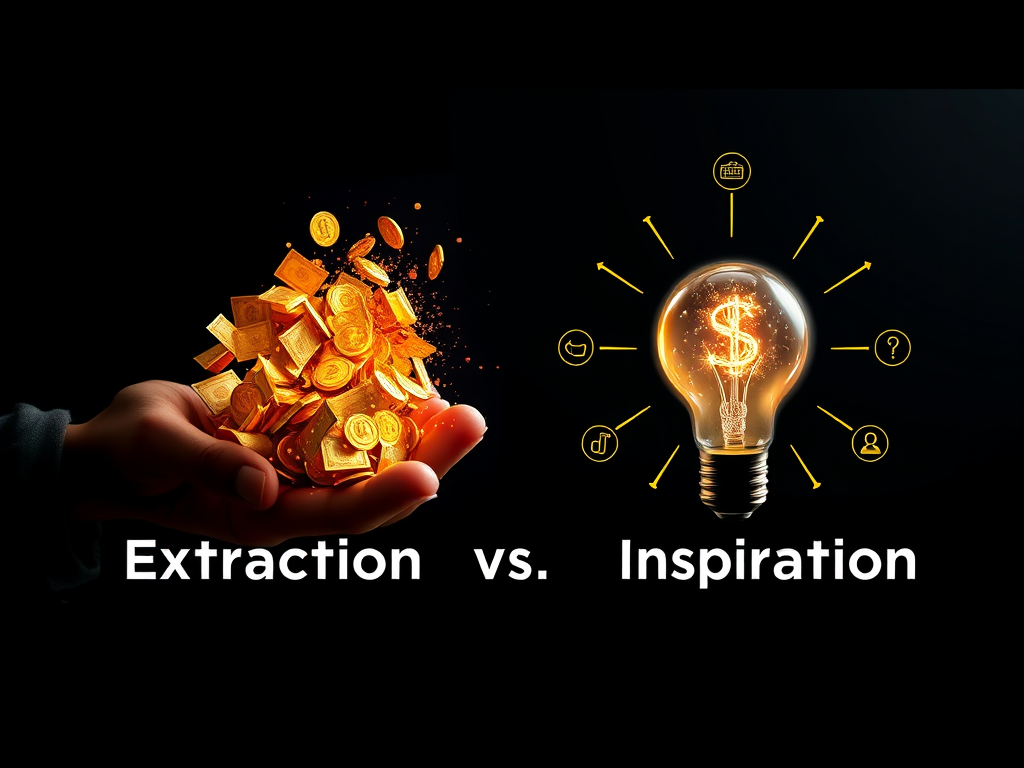
A Tale of Two Fortunes: Extraction vs. Inspiration
To understand the Swift phenomenon, we must place her wealth in its proper context. Consider the origins of other American billionaires.
The Extraction Model: Think of Amazon and Jeff Bezos. Its business model relies on warehouses with notoriously grueling conditions. Reports have consistently shown that thousands of its employees qualify for SNAP (food stamps) and Medicaid, meaning taxpayers are bridging the gap between their wages and the cost of survival. The same is true for Walmart and the Walton family, one of the wealthiest dynasties on earth. Millions of their employees rely on public assistance to get by, a direct transfer of public funds to enable private profit. Even Kroger, one of the nation’s largest grocery chains, faces investigative reports showing a significant portion of its workforce depends on the very food stamps they might ring up at the register.
The pattern is clear: the majority of modern billionaires built their empires on business models where employee wages are not sufficient for life, making government assistance a mandatory, hidden part of their operational budget. Their fortunes exist because the public is forced to subsidize poverty wages.
The Inspiration Model: Now contrast that with Taylor Swift. As far as we know, the people working for her—from the highly-paid musicians in her band to the stagehands, sound engineers, and the now-legendary truck drivers—are not lining up for food stamps after a day’s work. They are represented by unions (a key difference from Amazon warehouses) and are reportedly paid well above industry standards, sometimes with life-changing bonuses.
Her wealth accumulation is a direct result of voluntary, discretionary spending. A fan chooses to spend $12 on a digital album, $200 on a concert ticket, $60 on a sweatshirt. This is not a choice akin to paying for groceries or electricity; it is a choice driven by fandom, art, and community. One model extracts. The other inspires.
The Litmus Test: The Subsidy Question
So, how do we judge? The test is simple:
If you became a billionaire by squeezing workers and shifting the cost of their survival onto the public, you are unethical.
If you became a billionaire because tens of millions of people freely chose to spend their disposable income on your art—and you, in turn, treat the team that makes it all possible with respect and industry-leading compensation—that is ethical.
By this measure, Taylor Swift doesn’t just clear the bar; she soars over it.
“The majority of billionaires rely on taxpayer-subsidized labor. As far as we know, Taylor Swift doesn’t.”

The Receipts: Ethics in Action
Ethics in wealth aren’t just about theory; they’re about provable action. The receipts matter.
- The Bonuses: The $100,000 checks for truck drivers are the headline act, but they are part of a broader pattern of generosity that includes bonuses for every tier of her tour crew, totaling an estimated $55 million in bonuses alone.
- The Philanthropy: At every stop on her Eras Tour, Swift has made significant, often quiet, donations to local food banks, putting money back into the communities that host her.
- The Voluntary Exchange: The core of her wealth remains rooted in a voluntary transaction. Fans are not coerced; they are delighted.
Now, hold these actions against the cold, hard data of the billionaire subsidy problem.
📊 The Billionaire Subsidy Problem:
While Taylor Swift’s workers receive life-changing bonuses, the workforce for many billionaire-owned companies relies on taxpayer subsidies to survive.
- Walmart: An estimated 14% of employees rely on SNAP. Taxpayers spend an estimated $6.2 billion annually on healthcare and food assistance for Walmart workers.
- Amazon: In multiple states, thousands of warehouse workers qualify for SNAP. In Arizona (2020), Amazon was the top employer of SNAP recipients.
- Kroger: A 2020 study found 14% of Kroger workers had experienced homelessness and two-thirds reported food insecurity.
- The Big Picture: A 2014 U.S. House report estimated taxpayers spend $153 billion annually subsidizing low-wage workers across major corporations.
The conclusion is inescapable: many billionaires don’t pay a living wage. The public does.
The Counterargument: The Mere Existence of a Billionaire
Of course, being “better than Bezos” is a low bar. It does not mean Taylor Swift is beyond critique. By definition, a billionaire holds more wealth than any single person could ever reasonably need in a thousand lifetimes. The existence of such concentrated wealth in a world with profound poverty and underfunded public systems is, itself, an ethical problem for many.
There are those who use their celebrity wealth as a engine for public good—Dolly Parton and her literacy program, book donations, and pandemic research funding is the gold standard. Swift, who has donated to food banks and literacy campaigns and helped fans with medical and student debts, could certainly follow this playbook more aggressively and systematically. The pressure on her to be a philanthropic force is, and should be, immense.
But there remains a fundamental moral difference between hoarding wealth that was extracted from the basic survival needs of an underpaid workforce and accumulating wealth that was freely given by fans in exchange for joy, art, and a sense of belonging.
“One model extracts. The other inspires.”
Why This Debate Actually Matters
This debate, in the end, is not really about Taylor Swift. It’s about us. It’s a proxy for a much larger conversation about what kind of economy we want to live in and what we are willing to accept.
Do we accept a model where billionaires privatize profits while socializing the costs of their workforce? Or do we draw sharp, important distinctions between fortunes built on exploitation and fortunes built on creativity and voluntary exchange?
Swift is not a perfect angel nor a paragon of virtue. She is a savvy businesswoman who owns her work and understands her value. But she also represents something exceedingly rare: a billionaire whose wealth is not built on a foundation of taxpayer-subsidized exploitation. She forces us to refine our arguments and move beyond simplistic sloganeering.
Closing Thought
If we are to grade billionaires on ethics, Taylor Swift passes the test. Not because she is perfect. Not because billionaires should be absolved from scrutiny or from the obligation to give back. But because her fortune rests on a foundation of choice rather than coercion, and her workers share in the success they help create.
And in an age where the majority of billionaires rely on taxpayers to fund their labor force, that difference isn’t just notable—it’s revolutionary. She has, perhaps unintentionally, drawn a line in the sand. The question is no longer just whether billionaires can be ethical, but which ones are willing to follow her lead.
 McClure Magazine
Leave a comment